
canada flag

PROUDLY CANADIAN COMPANY OWNED & OPERATED IN TORONTO SINCE 1989!

CALL NOW

Windows | Doors Blog

What Is a Butterfly Valve and How Does It Work?

A butterfly valve is a compact quarter-turn device that controls fluid flow through a pipe. Its central disc rotates around a stem, opening the passage, restricting it, or stopping it. The mechanism is simple. Its consequences are not.

Industry reports show why this design remains relevant. Grand View Research’s Industrial Valves Market report identifies water and wastewater treatment, oil and gas, chemicals, and power generation as major demand sectors. MarketsandMarkets also projects continuing growth in the global industrial valves market, driven by infrastructure renewal and process automation. These reports do not measure every butterfly valve separately, but they reveal the industrial conditions supporting its use. Demand is especially visible where large pipe diameters require low weight, fast operation, and manageable maintenance.

In practical service, an operator turns the stem through roughly 90 degrees. The disc then moves from parallel to perpendicular against the flow. A resilient seat may provide tight shutoff, while high-performance and triple-offset designs support higher temperatures or more demanding media. Standards such as API 609 and MSS SP-67 help guide valve construction, dimensions, and testing. Still, selection cannot rely on a catalog page alone. Pressure, temperature, fluid compatibility, cavitation risk, and cycling frequency all matter. A poorly selected valve can leak, erode, or become difficult to operate. Published market forecasts also vary by methodology, region, and reporting year. That limitation deserves attention. Understanding how a butterfly valve works means examining both its elegant motion and its operating boundaries.
What Is a Butterfly Valve and How Does It Work?

Butterfly Valve Basics: A 90° Quarter-Turn Flow-Control Device

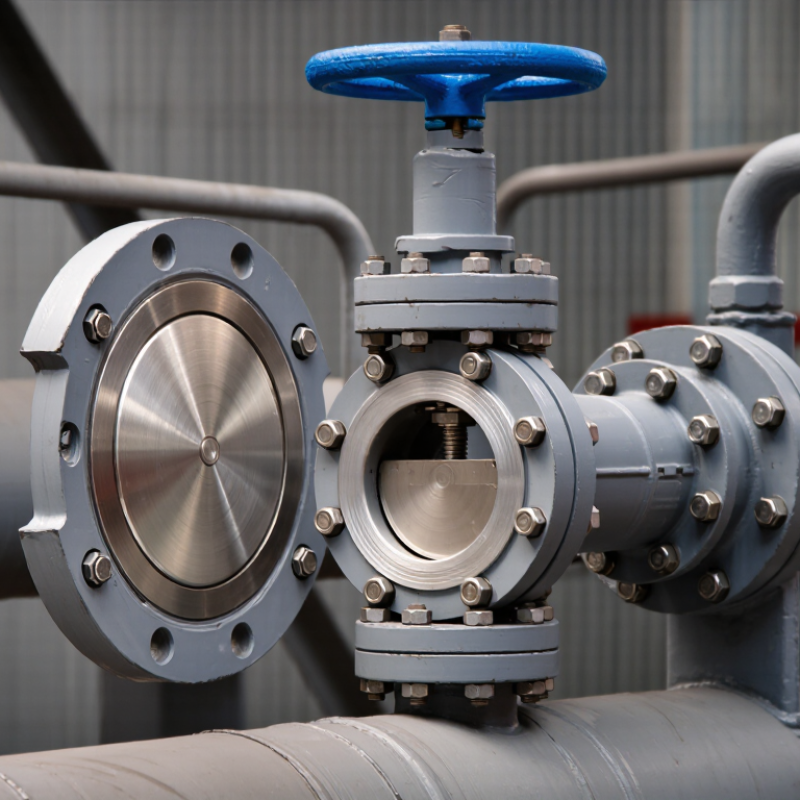
A butterfly valve is a compact flow-control device built around a 90° quarter-turn movement. Inside its body, a circular disc sits across the pipe and rotates on a stem. Turn the stem a quarter turn, and the disc moves from open to closed. At full opening, the disc aligns with the flowing medium. At closing, it faces the flow and blocks the passage. That simple motion is its main advantage. Not quite effortless.

In practical installations, operators often use a lever for smaller valves and a geared actuator for larger ones. The valve does more than start or stop flow. Partial disc rotation can throttle flow, although accurate regulation depends on valve design, pressure, and fluid conditions. A partly open disc creates turbulence, noise, and pressure loss. Field experience shows that a quick quarter-turn can solve an access problem, yet poor positioning may cause unwanted vibration. It is not always the best throttling choice.

Selection requires checking pipe size, temperature, pressure, corrosion risk, and sealing material. The disc and seat must suit the medium, especially when solids or abrasive particles are present. Before operation, inspect flange alignment and confirm the disc can rotate freely. A small installation error matters. For dependable service, operators should cycle the valve gradually and monitor leakage, torque, and downstream pressure. The mechanism looks simple, but real systems rarely are.

Core Components: Disc, Stem, Seat, Body, and DN25–DN1200 Sizes

What Is a Butterfly Valve and How Does It Work?

A butterfly valve controls flow with a circular disc mounted inside the body. The stem turns the disc, usually through a quarter-turn movement. When the disc aligns with the pipe, fluid passes through with limited obstruction. When it rotates across the passage, the valve closes. The seat presses around the disc edge and helps prevent leakage. It looks simple. The design is not careless.

The body connects the valve to the pipeline and carries mechanical loads. The disc must resist pressure, erosion, and repeated movement. The stem transfers torque from the handle, gearbox, or actuator. A damaged stem can create poor alignment and uneven sealing. In field inspections, seat wear often appears first near the disc edges. That small detail matters. Clean installation matters too.

Butterfly valves are commonly specified from DN25 to DN1200. DN25 suits compact utility lines, while DN1200 serves large water, air, and process pipelines. Larger sizes may need a gearbox or actuator because disc torque increases with pressure and diameter. Wafer, lug, and flanged bodies suit different connection requirements. Engineers should check pressure rating, temperature, medium, seat material, and operating frequency. Size alone is not enough. A valve that fits the pipe may still be poorly selected. This is where practical judgment remains necessary.

How It Works: Disc Rotation Regulates Flow Through the Pipeline

A butterfly valve regulates liquid or gas flow with a circular disc mounted inside a pipeline. The disc connects to a stem, which turns it around its central axis. When the disc faces the flow, the passage remains mostly open. When it rotates across the pipe, it blocks movement.

Its operation is simple, but the details matter. A quarter-turn actuator can rotate the disc from open to closed in about 90 degrees. At an intermediate angle, the disc narrows the available passage and reduces flow. This makes the valve useful for isolation and basic flow control. However, throttling can create turbulence, vibration, and pressure loss. Pipe size, fluid speed, and disc position all influence performance. In real installations, the ideal angle is not always obvious. Field readings may differ from design estimates.

Tips: Check the disc, stem, and seals during maintenance. Look for unusual noise, slow movement, or visible leakage. Confirm that the valve matches the fluid, temperature, and pressure conditions. Avoid forcing a stiff actuator. That can damage internal parts. A clear operating record also helps technicians identify gradual changes before they become serious.

Pressure and Temperature Ratings: PN6–PN40 and Material Selection

A butterfly valve controls flow with a circular disc mounted on a rotating shaft. Turning the shaft a quarter turn moves the disc from parallel to perpendicular with the pipeline. This compact design suits water, air, chemicals, and many industrial services. Its real performance depends on pressure, temperature, sealing material, and installation quality.

Pressure ratings usually range from PN6 to PN40, but they are not universal working limits. A PN16 valve may handle 16 bar under reference conditions, often near room temperature. Higher temperatures can reduce its allowable pressure. The valve body, disc, shaft, and seat must also tolerate the medium. Ductile iron can suit general water service, while stainless steel offers better resistance against many corrosive fluids. EPDM, NBR, and PTFE seats behave differently with heat and chemicals. Compatibility charts matter. Guessing here is expensive.

A practical selection checks pressure, temperature, pipe size, flow direction, and cycling frequency. I have seen valves fail early because the seat material was chosen for pressure, not chemical exposure. The rating plate alone can mislead.

Tips: Confirm the complete pressure-temperature curve before ordering. Check whether PN6, PN10, PN16, PN25, or PN40 matches the flange standard. Leave room for thermal expansion. Inspect the disc clearance before installation. A small alignment error can damage the seat. Also, recheck the medium’s concentration and temperature during real operation, because laboratory assumptions may be too optimistic.

Performance Standards: API 609 Design and ISO 5208 Leakage Testing

What Is a Butterfly Valve and How Does It Work?

A butterfly valve controls flow with a circular disc mounted on a rotating shaft. Turning the shaft aligns the disc with the pipe or places it across the passage. This compact design suits water, air, chemical, and process piping. Yet simple operation does not mean simple selection. Disc clearance, seat condition, shaft alignment, and pressure rating can affect service life.

API 609 provides a recognized design framework for butterfly valves. It addresses construction, materials, dimensions, pressure-temperature ratings, and required examinations. A valve built to this standard should match the intended line class and operating conditions. However, API 609 compliance alone does not prove acceptable shutoff performance. ISO 5208 focuses on pressure testing and leakage classification. The specified leakage rate matters. “Tight” is not always the same as “zero leakage.”

Tips: Confirm the valve type, test direction, medium, pressure, and temperature before ordering. Check the ISO 5208 leakage rate on the inspection record. A clean certificate can still hide a poor field installation. Uneven flange bolts may distort the seat. Small alignment errors can become expensive failures. Practical review is essential. The best specification includes materials, testing conditions, actuator requirements, and service history. One overlooked detail remains common: operators often judge a valve by easy movement, while internal sealing damage may already exist.

What Is a Butterfly Valve and How Does It Work? — Performance Standards: API 609 Design and ISO 5208 Leakage Testing

Data Dimension Reference or Topic Technical Description Typical or Specified Information
Valve Definition Butterfly Valve A quarter-turn valve that controls fluid flow with a circular disc mounted on a shaft. The disc rotates inside the flow passage to open, throttle, or shut off the line. Disc rotation: approximately 90° from fully open to fully closed
Operating Principle Rotary Disc and Shaft When the shaft turns the disc parallel to the flow direction, the passage is substantially open. When the disc turns across the passage, it blocks the flow and the seat provides shut-off sealing. Open position: low flow obstruction
Closed position: disc contacts or compresses the seat
Main Components Valve Construction The principal parts are the body, disc, stem or shaft, seat, and operating mechanism. Depending on the design, the stem may be centered or offset from the disc and seat. Body, disc, shaft, seat, actuator, position indicator
Common Designs Concentric and Offset Types Concentric designs place the shaft along the centerline of the disc and seat. Offset designs move the shaft away from one or more centerlines to reduce seat contact during operation and support lower-friction movement. Concentric: general-purpose service
Double-offset or triple-offset: reduced rubbing and higher-temperature applications
Flow Control Isolation and Throttling Butterfly valves are widely used for on/off isolation and can also regulate flow when the valve, actuator, and process conditions are suitable. Throttling performance depends on disc geometry, pressure drop, and control requirements. Suitable for quarter-turn isolation
Throttling capability varies by design and service
Actuation Manual or Powered Operation Operation may be provided by a hand lever, gearbox, pneumatic actuator, electric actuator, or hydraulic actuator. Actuator sizing must account for breakaway torque, running torque, shut-off torque, and safety factors. Manual: lever or gearbox
Automatic: pneumatic, electric, or hydraulic
Design Standard API 609 API 609 covers butterfly valves used in petroleum, petrochemical, and natural gas industries. It addresses valve types, pressure-temperature ratings, materials, dimensions, design requirements, inspection, and testing requirements for applicable valve constructions. Covers wafer, lug, and flanged configurations depending on the applicable design category and edition
API 609 Valve Categories Category A and Category B Category A generally refers to resilient-seated butterfly valves, while Category B generally refers to high-performance butterfly valves with a seat arrangement intended for more demanding pressure, temperature, or service conditions. Category A: resilient seat
Category B: high-performance seat design
Pressure Rating API 609 and Applicable Piping Class The allowable pressure and temperature are determined by the valve design, body and trim materials, seat material, and the applicable pressure class. The pressure rating must be checked at the intended operating temperature. Common flange classes include Class 150 and Class 300; actual limits depend on construction and materials
Leakage Testing ISO 5208 ISO 5208 specifies production pressure testing for industrial valves, including shell strength testing and closure tightness testing. The test method, test fluid, test pressure, duration, and acceptance criteria should be stated in the purchase or inspection specification. Shell test: verifies pressure boundary integrity
Closure test: verifies seat tightness
Leakage Rate ISO 5208 Rate Designations ISO 5208 defines leakage-rate designations rather than assuming that every valve has the same allowable leakage. The selected rate must be matched to the valve type, seat material, service, and project requirement. Examples include Rate A, Rate AA, Rate B, Rate C, Rate CC, Rate D, Rate E, Rate EE, Rate F, and Rate G
Seat Material Resilient or Metal Seat Resilient seats can provide tight shut-off across a broad range of general services but have temperature and chemical compatibility limits. Metal seats are selected for higher-temperature, abrasive, or severe-service applications where permitted by the design. Common resilient materials: EPDM, NBR, PTFE
Metal seat: selected for temperature and service conditions
Installation Style Wafer, Lug, and Flanged Wafer valves are clamped between flanges. Lug valves use threaded or tapped lugs and may permit end-of-line service when specifically designed for it. Flanged valves have integral flange ends for bolted connection. Selection depends on piping layout, maintenance needs, pressure class, and end-of-line requirements
Advantages Compact Quarter-Turn Design Butterfly valves are generally compact, lightweight, and economical for large nominal pipe sizes. They require less installation space than many multi-turn valve types and can be automated with relatively simple quarter-turn actuators. Low weight, compact face-to-face length, fast operation, suitable for large bore piping
Selection Factors Application Engineering Selection should consider fluid composition, pressure, temperature, flow velocity, cavitation risk, solids content, corrosion, fire-safety requirements, emission control, actuator torque, installation orientation, and required leakage rate. Confirm materials, pressure-temperature rating, end connection, seat design, actuation, and test requirements before purchase

Technical note: API 609 addresses butterfly-valve design and related requirements, while ISO 5208 addresses industrial-valve pressure and closure testing. The exact edition, pressure class, material combination, test procedure, and acceptance rate should be specified for each project.

Article Source:

Read Our 5-Star Testimonials

quotes

Amazing service and quality products. Installation was on time and on budget. Our windows look awesome. Edan gave us his full attention from the first call and every step of the way after. Highly recommend.

Adam Rivers Reviewer Image

Adam Rivers

quotes

New windows and door for basement and new metal/glass back door for main house - even through my indecisiveness and the covid-19 challenges Ayal and his installers were patient with me and I am very happy with the look and quality of the install.

homestars logo image
Geraint Reviewer Image

Geraint

quotes

It was a pleasure dealing with Jack and all Delco's stuff. The windows arrived on the date for which were promised. The quality of the service, product and workmanship were excellent. I would gladly recommend Delco to anyone need Windows and Doors

Ruven Y. Reviewer Image

Ruven Y.

quotes

We're so happy with our new front door. Very high quality finish, beautiful window. Installation was impeccable and done very quickly. Hinge and 3-point lock mechanism fit perfectly and feel very solid. Very attentive customer service. Door really ups our curb appeal!

homestars logo image
Jim Bird Reviewer Image

Jim Bird

quotes

I just had my front door replaced and cannot say enough good things about this company. From start to finish their professionalism is outstanding, and the workmanship excellent. Would highly recommend

Maureen Fuller Reviewer Image

Maureen Fuller

quotes

Delco supplies my windows and doors for renovations throughout the GTA. Edan and his staff are the best. Well priced quality products and personalized service. Highly recommended.

homestars logo image
Noah Klar Reviewer Image

Noah Klar

quotes

We have 3 sliding doors and a double front door replaced. All work was done professionally but well qualified craftsman. Watching them work it was clear they new what they were doing and work is first class.

homestars logo image
R. Pierce Reviewer Image

R. Pierce

quotes

We used Delco to replace our windows and patio door and door glass inserts. We are very happy with the quality of the windows and patio door and were very impressed with the installers as well who were very professional and clean. Thank you Nasho and George for your hard work and patience. Also, a big thank you to Ayal who always returned my calls and answered all my questions.

homestars logo image
Sandra Reviewer Image

Sandra

quotes

Delco provided all the exterior doors for our new home build. Ayal was great and the company is very customer service oriented. The doors look beautiful, the hardware is high end and the install went very well. Overall we are very happy with the product and service.

homestars logo image
Sarah Reviewer Image

Sarah

quotes

Ayal and Edan were great to work with. They provided extensive product knowledge and had a great selection in their showroom. The windows and doors changed the whole look of the house and gave a much needed modern yet classic update. Great quality and workmanship! Thank you!

Stephanie Lannaci Reviewer Image

Stephanie Lannaci

quotes

Both my wife and I could not have been happier with the product and service displayed by the owner and the installers. They had kept true to there word and the timelines. The process was catered to our schedule and was seamless.

Fabrizio Macieri Reviewer Image

Fabrizio Macieri

quotes

Had a great experience with Delco. They were professional and did a great job on time.

Joey Oliveira Reviewer Image

Joey Oliveira

quotes

Our experience with Delco Doors has been very good. We needed to replace out front door. Our old 6 feet Steel doors were removed and replaced with Delco 8 feet Fiberglass Doors. The installation went very smoothly, and the guys made sure that everything was fitting squarely and tight. They cleaned up after they were done and were very pleasant to work with. Would highly recommend them.

Angie Gandhi Reviewer Image

Angie Gandhi

quotes

A fantastic company to deal with from start to finish. They were professional, courteous and the project was completed in the timeframe agreed upon. Would highly recommend Delco.

homestars logo image
Linda Reviewer Image

Linda

quotes

I would recommend Delco Windows and Doors without any hesitation. The quality of the products is very good, the installation exceeded my expectations and the responsiveness and punctuality is impressive.

homestars logo image
Serban Dinca Reviewer Image

Serban Dinca

quotes

Very good and timely service. A pleasure to work with Edan Next time I need windows and doors I will definitely call them again

Adrian Nema Reviewer Image

Adrian Nema

quotes

Recently ordered a custom window from Delco. We are extremely happy with the level of customer service - Elyse went out of her way to notify us when the window came in and came in to work on her day off so we could come pick up the window. If we need another window we will definitely come back to Delco!

Jonathon & Sheri Mcintosh Reviewer Image

Jonathon & Sheri Mcintosh

quotes

I would highly recommend this company, the final product was beyond my expectations, My new front door makes my house standout so happy thank you Delco Windows and doors. I will definitely use Delco Windows and doors again in the future thanks to Edan and the installers

Maria Reviewer Image

Maria

quotes

Existing door replacement is a delicate project. I am very satisfied with job well done by Ayal Jack and his installer. Highly professional team, they know their business well, easy to deal with, very accommodating. He guided us step by step to select the best fit for our purpose.

homestars logo image
Alfy Reviewer Image

Alfy

quotes

I would highly recommend this company. They were very easy to deal with, accommodating and professional. The final product was beyond my expectations. The products completely transformed the front of my house and for sure increased its value and curb appeal. Thanks!

homestars logo image
Mi Reviewer Image

Mi

quotes

Happy experience from start to finish. Thank you to Edan for going out of his way to meet us late one evening and his helpful consultation in the showroom especially thank you to the extremely professional, clean and friendly crew of installers. Everything was as promised, the men arrived on time, their work was immaculate and complete, their craftsmanship beyond reproach.

Esther Tobin Reviewer Image

Esther Tobin

We’ll Come To You!

GET A FREE QUOTE

Quality New Windows & Doors. Competitively Priced!

Christine R.

Please, enter a valid value