canada flag

PROUDLY CANADIAN COMPANY OWNED & OPERATED IN TORONTO SINCE 1989!

CALL NOW

Windows | Doors Blog

How to Choose the Right Car Elevator Platform?

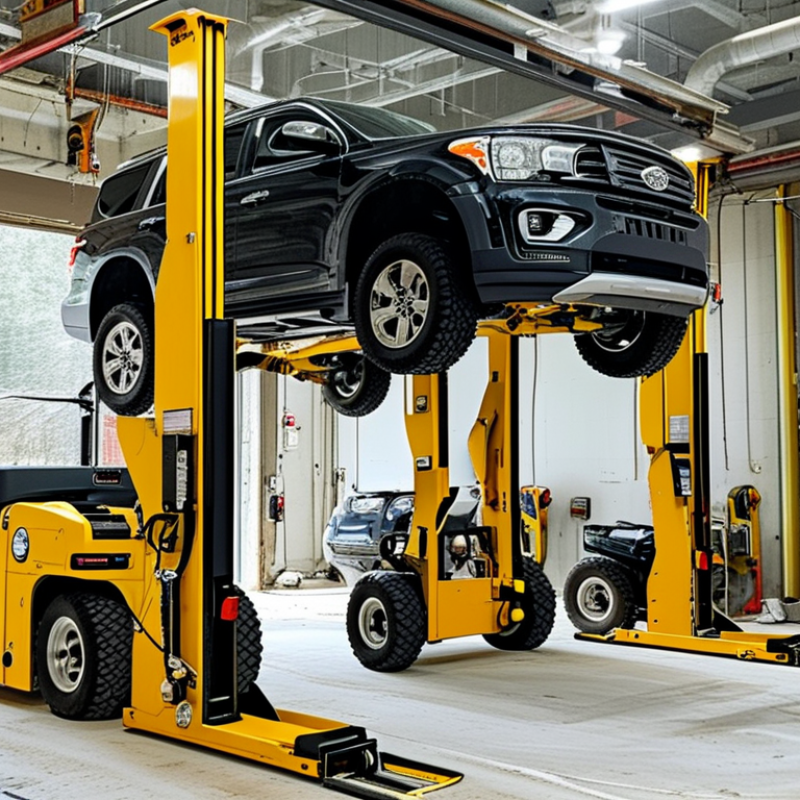
Choosing the right Car Elevator Platform is not simply a matter of comparing prices. It is a decision involving vehicle dimensions, building structure, daily traffic, safety controls, and long-term maintenance. A platform that lifts a compact sedan may not safely handle a heavy electric SUV. Small differences matter.

Begin with the real site conditions. Measure the entrance width, ceiling height, pit depth, and available turning space. Record the heaviest vehicle, including passengers and luggage. Consider how often the equipment will operate each day. A residential garage may need quiet, compact operation, while a commercial facility may require faster cycles and stronger protection systems.

Safety should guide every comparison. Look for clear load ratings, emergency lowering, door interlocks, anti-drop protection, and accessible control panels. Ask whether the manufacturer provides installation records, inspection guidance, spare parts, and technician support. Certified installers should review the structure and local building requirements before delivery. Their experience can reveal problems that a brochure cannot show.

Do not ignore comfort. A slow platform can frustrate drivers, while excessive vibration may signal poor design or installation. Yet the most expensive model is not automatically the best choice. An attractive quote may exclude drainage, electrical work, ventilation, or future servicing. That is where many budgets become unrealistic.

This guide explains how to compare Car Elevator Platform options with practical judgment. It also examines common mistakes, because even experienced buyers can overlook daily operating details. The right solution should fit the building, the vehicles, and the people using it—not just the sales specification.
How to Choose the Right Car Elevator Platform?

Define Vehicle Size and Weight: 2,000–3,500 kg Capacity Range

How to Choose the Right Car Elevator Platform?

Define Vehicle Size and Weight: 2,000–3,500 kg Capacity Range

Choosing a car elevator starts with verified vehicle data, not visual judgment. Measure curb weight, passengers, luggage, and removable accessories. Then add a practical margin. The 2,000 kg class may suit compact cars and lighter sedans. Larger SUVs, vans, and electric vehicles often need 2,500–3,500 kg capacity. The IEA Global EV Outlook 2024 reports that SUVs represented nearly half of global car sales in 2023. Their growing size affects platform selection.

Battery-powered vehicles deserve extra attention. The battery can concentrate substantial weight beneath the floor. Check axle loads, wheelbase, track width, and tire contact positions. Do not rely only on total mass. A 3,000 kg vehicle may still overload a narrow platform if its axle distribution is uneven. I have seen this assumption create uncomfortable installation compromises.

Use the highest expected operating weight, then verify the lift’s rated load under applicable standards. EN 1493:2022 provides safety requirements for vehicle lifts, while ISO 12100 supports machinery risk assessment. Ask for documented load tests, platform drawings, emergency lowering details, and maintenance intervals. The EPA Automotive Trends report shows vehicle design has continued shifting toward heavier utility models. That trend matters. A 2,000 kg platform can become restrictive sooner than expected. Keep clearances generous, especially around mirrors, charging equipment, and door openings. Oversizing costs more, but underestimating capacity can limit safe daily use.

Match Platform Dimensions to Vehicles up to 5.5 m Long

How to Choose the Right Car Elevator Platform?

Match Platform Dimensions to Vehicles up to 5.5 m Long

Choosing a car elevator platform starts with the vehicle, not the shaft. Measure the longest expected vehicle, including bumpers, tow fittings, and any rear-mounted equipment. A 5.5-meter car should not be placed on a platform with the same usable length. Allow practical clearance for positioning and safe door operation. The exact allowance depends on the elevator design and local installation requirements.

Width needs equal attention. A large SUV may be shorter than a luxury sedan but wider at the mirrors. Measure body width, mirror-to-mirror width, and the space needed for passengers to exit. Also check the platform entrance, guide rails, and nearby walls. Tight edges create stress during daily use. Small errors become expensive.

Height is easy to overlook. Include roof racks, antennas, open tailgates, and uneven loading conditions. A platform suitable for a low sedan may fail with a tall van. In real site checks, mark the vehicle’s footprint on the floor before selecting equipment. It reveals awkward turning angles and poor door clearance quickly. I would also test the largest vehicle, not the average one. That approach may reduce capacity on paper, but it improves reliability in practice. Recheck the measurements. Planning assumptions are not always accurate.

How to Choose the Right Car Elevator Platform?

Match the platform’s usable length to the vehicle body length, allowing approximately 0.5 m of total handling clearance for positioning and door access.

The vehicle dimensions shown are representative maximum body lengths for common passenger-vehicle categories. For vehicles up to 5.5 m long, a platform with at least 6.0 m of usable length is a practical selection target. Always verify the elevator manufacturer’s rated dimensions, load capacity, turning space, and local safety requirements.

Compare Hydraulic, Scissor, and Four-Post Lift Configurations

Choosing a car elevator platform starts with load behavior, not appearance. The International Energy Agency reported nearly 14 million electric cars sold worldwide in 2023. Many electric SUVs carry heavy battery packs, so rated capacity must include the vehicle, passengers, and equipment. A hydraulic platform suits frequent movement and taller travel. Its cylinders provide strong lifting force, but oil temperature and seal maintenance deserve attention.

Scissor lifts offer a low-profile deck and stable vertical movement. They work well where the platform must disappear into a finished floor. However, their linked arms need careful inspection around pivot points. A four-post configuration spreads weight across four runways, making it practical for heavier vehicles and storage parking. It usually needs more floor space and may create a higher loading threshold. According to the U.S. Department of Energy’s 2024 Vehicle Technologies Market Report, vehicle sizes and weights have continued trending upward, which makes older capacity assumptions risky.

Measure the tallest vehicle, widest mirror position, wheelbase, and turning path. Then compare these figures with the platform’s certified capacity and usable deck dimensions. Industry safety guidance from the Automotive Lift Institute emphasizes rated components, mechanical restraints, and documented inspection procedures. That matters more than a glossy control panel. I once underestimated door clearance by only a few centimeters; the platform operated, but daily use became awkward. Leave practical margin, not just technical compliance. Consult a qualified installer before fixing the pit depth or overhead height.

Verify Safety Compliance with EN 81-20/50 and EN 1493

How to Choose the Right Car Elevator Platform?

A car elevator is not automatically covered by one standard. Its intended use decides the compliance route. EN 1493 applies specifically to vehicle lifts, including platforms that raise cars for parking or servicing. EN 81-20 sets safety requirements for lifts carrying people or goods. EN 81-50 covers design calculations, component testing, and verification methods. If passengers travel with the vehicle, EN 81 requirements may become essential. Local building rules still need checking.

Safety is not paperwork alone. The ILO estimated 2.93 million work-related deaths globally in 2023, showing why lifting equipment deserves disciplined inspection. Eurostat reported approximately 3.0 million non-fatal workplace accidents across the EU in 2022. A weak interlock or poor emergency stop can become serious quickly. Check rated load, platform deflection, door locking, overspeed protection, emergency lowering, and pit access. Ask for test records, risk assessments, and traceable calculations.

Watch the cables.

During site evaluation, measure the vehicle’s actual wheelbase, height, turning path, and axle load. Do not rely only on brochure dimensions. A certificate can also mislead when it covers another configuration. I would verify the exact model, installation layout, and control logic with an independent competent assessor. Some projects expose a difficult question: is the platform only lifting a car, or is it transporting people too? That answer should shape the standard selection before procurement, not after installation.

Evaluate Speed, Duty Cycles, Door Clearance, and Emergency Access

How to Choose the Right Car Elevator Platform?

Choosing a car elevator platform starts with real traffic, not impressive brochure figures. Measure vehicle weight, wheelbase, roof height, and daily movement patterns. Speed matters when drivers wait in a narrow garage, but smooth stopping matters more. A fast platform is not automatically better. Sudden movement can unsettle vehicles and increase loading errors. Ask for tested travel times under normal and maximum loads. Then compare acceleration, leveling accuracy, and noise.

Duty cycles reveal whether the platform suits your building. Count expected trips during busy periods, not only the daily average. A residential system may rest between uses, while a commercial garage can run continuously. Confirm the rated cycle frequency, cooling method, inspection intervals, and overload protection. Door clearance needs equal attention. Check the clear opening, turning space, mirror position, and threshold gap. A few lost centimeters can turn a simple entry into repeated reversing. I have found that drawings often miss practical driver behavior.

Emergency access should be discussed before installation. Request manual lowering procedures, backup power, internal communication, lighting, and a clearly reachable release system. Confirm who can respond and how training is documented. Never depend on a phone signal alone. Local authorities or qualified engineers should review fire access and rescue arrangements.

Tips: Test the platform with the largest intended vehicle. Mark wheel paths on the floor. Watch one complete loading cycle. Leave room for human mistakes.

How to Choose the Right Car Elevator Platform? — Evaluate Speed, Duty Cycles, Door Clearance, and Emergency Access
Evaluation Dimension Typical Planning Range Suitable Application Selection Guidance Verification Required Before Purchase
Rated Load 2,500–5,000 kg for passenger vehicles; higher capacities may be required for SUVs, vans, or service vehicles. Private garages, residential developments, commercial parking facilities, and vehicle showrooms. Confirm the maximum axle load, wheel positions, platform loading pattern, and local structural requirements.
Vertical Speed 0.10–0.20 m/s for low-rise private use; 0.20–0.50 m/s for higher-frequency commercial parking. Lower speeds suit short travel distances and cost-sensitive installations; higher speeds suit multi-level facilities. Check permitted speed limits, travel height, acceleration comfort, stopping accuracy, and applicable elevator or lifting-equipment regulations.
Travel Height Approximately 3–15 m for common low-rise installations; custom designs may serve greater heights. Basement parking, split-level garages, and multi-story vehicle storage. Calculate complete travel from the finished lower floor to the finished upper floor, including leveling tolerances and door-zone requirements. Measure finished floor levels, pit depth, overhead clearance, structural openings, and available machine-room or equipment space.
Duty Cycle Intermittent residential use: about 10–30 trips/day. Commercial use: approximately 50–150 trips/day. Intensive facilities may require more. Residential, office, hotel, dealership, automated parking, and public parking applications. Document trips per hour, peak traffic periods, rest intervals, operating hours, queue length, and expected annual usage.
Peak Throughput Often 4–12 complete cycles per hour, depending on travel height, door operation, loading, and control logic. Facilities where vehicles must be moved efficiently during arrival and departure peaks. Use a time-and-motion calculation based on actual site layout and require the supplier to state cycle-time assumptions clearly.
Platform Width Common clear platform widths are approximately 2.7–3.2 m for standard passenger cars and 3.2–3.8 m for larger vehicles. Passenger cars, SUVs, electric vehicles, and light commercial vehicles. Measure the widest vehicle body, mirror-to-mirror width, turning approach, wall offsets, and required pedestrian clearance.
Platform Length Common clear lengths are approximately 5.5–6.5 m for passenger vehicles; 6.5–7.5 m may be needed for long-wheelbase vehicles. Standard cars, SUVs, long-wheelbase vehicles, and light vans. Confirm the longest vehicle dimensions, wheelbase, turning path, loading direction, and required safety edge clearance.
Door Clear Width Approximately 2.4–2.8 m for many passenger vehicles; 2.8–3.2 m is preferable for larger SUVs, vans, or frequent commercial use. Single-vehicle access at one or more landing levels. Verify clear opening width after door hardware, tracks, frames, seals, and protective barriers are installed.
Door Clear Height Approximately 2.1–2.4 m for passenger vehicles; 2.4–2.7 m may be needed for vans or vehicles with roof equipment. Passenger cars, SUVs, vans, and service vehicles with different roof heights. Measure the maximum vehicle height at the entry point and confirm finished opening height, lintel depth, and overhead obstruction risks.
Emergency Access Required features typically include an emergency stop, manual lowering or raising method, emergency unlocking arrangement, backup lighting, and alarm or communication provision. All installations, especially enclosed shafts, public facilities, and unattended parking areas. Confirm rescue procedures, trapped-vehicle release method, power-failure behavior, emergency lighting duration, communication coverage, and inspection requirements.
Backup Power Behavior Options may include controlled lowering, return-to-floor operation, battery-supported controls, or standby generator connection. Sites where power interruptions could trap vehicles or disrupt emergency access. Test failure scenarios, battery capacity, generator compatibility, manual release procedures, and restart interlocks.
Leveling Accuracy Common design targets are approximately ±5–10 mm at the landing floor, subject to equipment type and local regulations. Applications requiring comfortable vehicle movement between platform and finished floor. Accurate leveling reduces tire impact, trip hazards, bumper contact, and difficulty when driving across the platform threshold. Verify leveling performance under both rated load and partial load, including stopping accuracy after repeated cycles.
Safety Interlocks Landing doors should remain locked unless the platform is correctly positioned; movement should be prevented when doors or safety circuits are open. All vehicle elevator platforms with enclosed or protected landings. Review the safety circuit diagram and witness tests for door interlocks, overspeed protection, overload protection, and unintended movement prevention.
Environmental Conditions Typical indoor installations operate within approximately 5–40°C; outdoor or humid sites require additional protection. Indoor garages, semi-enclosed parking areas, coastal locations, and exposed outdoor installations. Drainage, corrosion protection, water ingress control, ventilation, and low-temperature protection can significantly affect reliability. Confirm enclosure rating, coating system, drainage design, corrosion category, snow or wind exposure, and maintenance access.
Maintenance Access Routine inspection is commonly required monthly or quarterly, with statutory inspections according to local rules. Every installation, particularly high-duty commercial facilities. Obtain the maintenance schedule, spare-parts list, inspection checklist, fault-code documentation, and maximum permitted service intervals.
Planning note: The ranges above are general engineering planning values for vehicle elevator platforms, not universal design limits. Final capacity, dimensions, speed, duty cycle, safety systems, and emergency procedures must be confirmed through a site survey, structural assessment, risk assessment, and the regulations applicable to the installation location.

Read Our 5-Star Testimonials

quotes

Amazing service and quality products. Installation was on time and on budget. Our windows look awesome. Edan gave us his full attention from the first call and every step of the way after. Highly recommend.

Adam Rivers Reviewer Image

Adam Rivers

quotes

New windows and door for basement and new metal/glass back door for main house - even through my indecisiveness and the covid-19 challenges Ayal and his installers were patient with me and I am very happy with the look and quality of the install.

homestars logo image
Geraint Reviewer Image

Geraint

quotes

It was a pleasure dealing with Jack and all Delco's stuff. The windows arrived on the date for which were promised. The quality of the service, product and workmanship were excellent. I would gladly recommend Delco to anyone need Windows and Doors

Ruven Y. Reviewer Image

Ruven Y.

quotes

We're so happy with our new front door. Very high quality finish, beautiful window. Installation was impeccable and done very quickly. Hinge and 3-point lock mechanism fit perfectly and feel very solid. Very attentive customer service. Door really ups our curb appeal!

homestars logo image
Jim Bird Reviewer Image

Jim Bird

quotes

I just had my front door replaced and cannot say enough good things about this company. From start to finish their professionalism is outstanding, and the workmanship excellent. Would highly recommend

Maureen Fuller Reviewer Image

Maureen Fuller

quotes

Delco supplies my windows and doors for renovations throughout the GTA. Edan and his staff are the best. Well priced quality products and personalized service. Highly recommended.

homestars logo image
Noah Klar Reviewer Image

Noah Klar

quotes

We have 3 sliding doors and a double front door replaced. All work was done professionally but well qualified craftsman. Watching them work it was clear they new what they were doing and work is first class.

homestars logo image
R. Pierce Reviewer Image

R. Pierce

quotes

We used Delco to replace our windows and patio door and door glass inserts. We are very happy with the quality of the windows and patio door and were very impressed with the installers as well who were very professional and clean. Thank you Nasho and George for your hard work and patience. Also, a big thank you to Ayal who always returned my calls and answered all my questions.

homestars logo image
Sandra Reviewer Image

Sandra

quotes

Delco provided all the exterior doors for our new home build. Ayal was great and the company is very customer service oriented. The doors look beautiful, the hardware is high end and the install went very well. Overall we are very happy with the product and service.

homestars logo image
Sarah Reviewer Image

Sarah

quotes

Ayal and Edan were great to work with. They provided extensive product knowledge and had a great selection in their showroom. The windows and doors changed the whole look of the house and gave a much needed modern yet classic update. Great quality and workmanship! Thank you!

Stephanie Lannaci Reviewer Image

Stephanie Lannaci

quotes

Both my wife and I could not have been happier with the product and service displayed by the owner and the installers. They had kept true to there word and the timelines. The process was catered to our schedule and was seamless.

Fabrizio Macieri Reviewer Image

Fabrizio Macieri

quotes

Had a great experience with Delco. They were professional and did a great job on time.

Joey Oliveira Reviewer Image

Joey Oliveira

quotes

Our experience with Delco Doors has been very good. We needed to replace out front door. Our old 6 feet Steel doors were removed and replaced with Delco 8 feet Fiberglass Doors. The installation went very smoothly, and the guys made sure that everything was fitting squarely and tight. They cleaned up after they were done and were very pleasant to work with. Would highly recommend them.

Angie Gandhi Reviewer Image

Angie Gandhi

quotes

A fantastic company to deal with from start to finish. They were professional, courteous and the project was completed in the timeframe agreed upon. Would highly recommend Delco.

homestars logo image
Linda Reviewer Image

Linda

quotes

I would recommend Delco Windows and Doors without any hesitation. The quality of the products is very good, the installation exceeded my expectations and the responsiveness and punctuality is impressive.

homestars logo image
Serban Dinca Reviewer Image

Serban Dinca

quotes

Very good and timely service. A pleasure to work with Edan Next time I need windows and doors I will definitely call them again

Adrian Nema Reviewer Image

Adrian Nema

quotes

Recently ordered a custom window from Delco. We are extremely happy with the level of customer service - Elyse went out of her way to notify us when the window came in and came in to work on her day off so we could come pick up the window. If we need another window we will definitely come back to Delco!

Jonathon & Sheri Mcintosh Reviewer Image

Jonathon & Sheri Mcintosh

quotes

I would highly recommend this company, the final product was beyond my expectations, My new front door makes my house standout so happy thank you Delco Windows and doors. I will definitely use Delco Windows and doors again in the future thanks to Edan and the installers

Maria Reviewer Image

Maria

quotes

Existing door replacement is a delicate project. I am very satisfied with job well done by Ayal Jack and his installer. Highly professional team, they know their business well, easy to deal with, very accommodating. He guided us step by step to select the best fit for our purpose.

homestars logo image
Alfy Reviewer Image

Alfy

quotes

I would highly recommend this company. They were very easy to deal with, accommodating and professional. The final product was beyond my expectations. The products completely transformed the front of my house and for sure increased its value and curb appeal. Thanks!

homestars logo image
Mi Reviewer Image

Mi

quotes

Happy experience from start to finish. Thank you to Edan for going out of his way to meet us late one evening and his helpful consultation in the showroom especially thank you to the extremely professional, clean and friendly crew of installers. Everything was as promised, the men arrived on time, their work was immaculate and complete, their craftsmanship beyond reproach.

Esther Tobin Reviewer Image

Esther Tobin

We’ll Come To You!

GET A FREE QUOTE

Quality New Windows & Doors. Competitively Priced!

Christine R.

Please, enter a valid value