canada flag

PROUDLY CANADIAN COMPANY OWNED & OPERATED IN TORONTO SINCE 1989!

CALL NOW

Windows | Doors Blog

How to Choose Non Aging Foam Sandwich Panels?

Choosing a Non-Aging Foam Sandwich Panel requires more than comparing advertised insulation values. The panel must perform under heat, moisture, wind, impact, and repeated temperature changes. This matters because the building sector consumed about 34% of global energy and produced 37% of energy-related emissions in 2022, according to the 2023 Global Status Report for Buildings and Construction from UNEP. Better envelope performance can reduce operational demand, but only when the panel remains stable throughout its service life.

The phrase “non-aging” can mislead. No foam is truly ageless. Experienced specifiers examine long-term thermal resistance, dimensional stability, water absorption, core density, and bond strength between the foam and metal skins. EN 14509 provides a key European reference for factory-made insulating sandwich panels. ASTM C518 can help verify thermal conductivity, while fire behavior should be checked against the applicable classification, such as EN 13501-1 or ASTM E84. Ask for independent test reports, not only a supplier brochure.

Small details matter. A cold-room panel may face condensation at joints. A factory roof may experience strong sunlight, vibration, and maintenance traffic. Check the intended temperature range, joint design, coating system, fasteners, and installation tolerances. The 2024 Global Status Report for Buildings and Construction also emphasizes efficiency, durability, and resilient building systems. That broader direction supports careful panel selection. Still, a perfect specification cannot repair poor installation. Review warranty terms, aging evidence, production quality controls, and site conditions together. The cheapest panel may become expensive after moisture enters the core. A practical comparison should balance tested performance, service life, fire safety, maintenance needs, and total lifecycle cost.
How to Choose Non Aging Foam Sandwich Panels?

Understanding the Structure and Benefits of Non-Aging Foam Sandwich Panels

How to Choose Non Aging Foam Sandwich Panels?

Understanding the Structure and Benefits of Non-Aging Foam Sandwich Panels

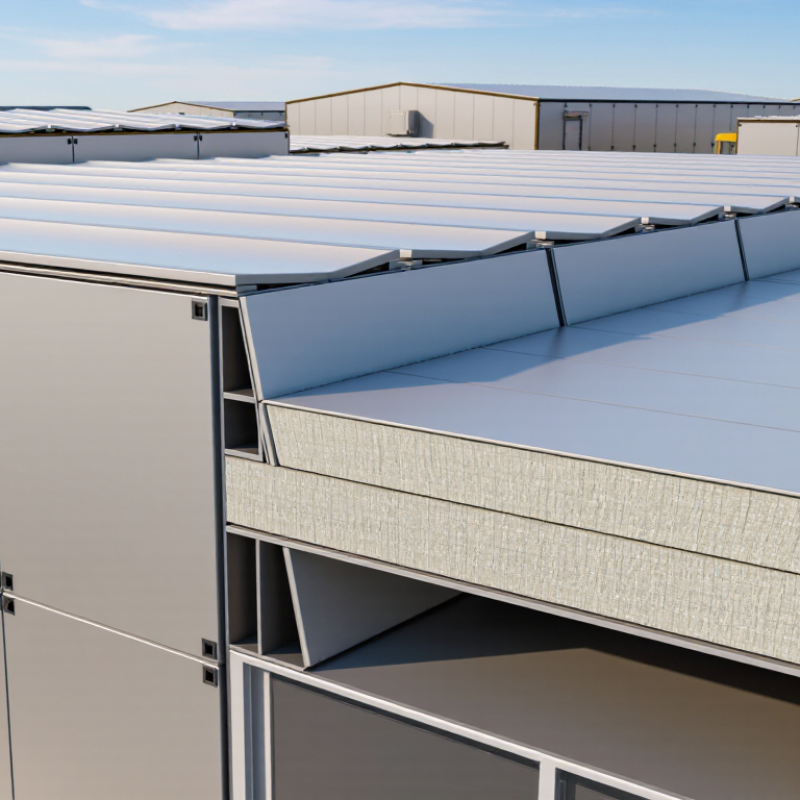
A non-aging foam sandwich panel combines two strong facings with a lightweight insulating core. The facings resist impact, while the foam limits heat transfer. Closed-cell foam usually absorbs less water than open-cell insulation. That detail matters in cold rooms, roofs, and humid factory spaces.

Look closely at the core density, facing thickness, joint design, and fire classification. A thicker panel is not automatically better. Poorly sealed joints can create thermal bridges, even when the foam performs well. UNEP and GlobalABC reported in 2024 that buildings consumed about 32% of global energy. Better envelope design can reduce heating and cooling demand. It is a practical target, not a marketing promise.

“Non-aging” can mislead.

In real installations, foam does not remain untouched forever. Ultraviolet exposure, moisture, compression, and careless cutting may reduce performance. I would request test data for thermal conductivity, dimensional stability, water absorption, and fire behavior. Standards-based testing, such as methods aligned with ASTM or EN procedures, offers stronger evidence than a brochure claim. The U.S. Department of Energy also identifies buildings as major energy users, reinforcing the value of continuous insulation. Still, long service life depends on workmanship. A well-made panel with damaged edges may fail earlier than a simpler panel installed carefully.

Identifying Key Performance Requirements for Your Application

How to Choose Non Aging Foam Sandwich Panels?

Identifying Key Performance Requirements for Your Application

Choosing a non-aging foam sandwich panel starts with the application, not the product label. Define the service temperature, panel span, supported loads, and expected design life. A cold-room wall faces different risks from a roof exposed to wind and sunlight. In practical site reviews, overlooked details often include forklift impacts, standing water, and repeated door movement.

“Non-aging” should mean retained performance, not an unlimited promise. Ask for documented aging data under relevant conditions.

Thermal performance may control thickness, but moisture resistance can control durability. Check the declared thermal conductivity, water absorption, vapor behavior, and joint design. Small gaps around fasteners can create cold bridges and condensation. Measure the worst seasonal temperature difference, not the average.

For a food-processing area, cleanability and wash-down exposure matter. For a workshop, impact resistance and acoustic control may matter more. Fire performance must match local building requirements and the complete assembly, including facings, sealants, and fixings. Core data alone is insufficient.

Confirm compressive strength, shear capacity, facing adhesion, and dimensional stability through recognized test reports. Request tolerances and installation instructions. They are easy to dismiss. That can be costly.

I would also inspect a sample edge, checking bond uniformity and core condition. If the panel will carry unusual equipment, have a qualified engineer verify spans and connections. One weakness remains: laboratory results cannot reproduce every site mistake. Keep records of temperature, moisture, cutting, and maintenance, then review actual performance after installation.

Comparing Foam Cores, Facings, and Panel Construction Methods

How to Choose Non Aging Foam Sandwich Panels?

“Non-aging” is not a magic label. Foam panels still face heat, moisture, ultraviolet exposure, and joint movement. The International Energy Agency’s 2023 Global Status Report states that buildings consumed about 30% of global final energy in 2022. Therefore, stable insulation performance matters beyond the first installation year.

Core selection should match the climate and fire strategy. Polyisocyanurate foam commonly offers thermal conductivity near 0.022 W/m·K. Expanded polystyrene is often closer to 0.036 W/m·K, while mineral wool may approach 0.040 W/m·K. Actual values vary with density, temperature, and aging. Long-term resistance should be verified through ASTM C1303 or EN 13165 testing, not brochure claims. Closed-cell foam can resist moisture better, but damaged edges remain vulnerable.

Facings protect the core and carry mechanical loads. Coated steel suits impact-prone walls, while aluminum reduces weight and resists corrosion in suitable environments. Fiberglass facings can simplify curved or lightweight construction. Continuous lamination usually provides more consistent bonding than manual assembly, but poor adhesive coverage creates hidden voids. A panel can pass a laboratory test yet fail at a cut edge. That is the uncomfortable detail. Check joint geometry, vapor control, fastener spacing, and production tolerances. ASHRAE Handbook—Fundamentals 2021 also stresses that thermal performance depends on thermal bridges, not insulation value alone. A small design omission can age the whole system faster.

How to Choose Non-Aging Foam Sandwich Panels?

Comparing foam cores, facings, and panel construction methods requires balancing moisture resistance, thermal efficiency, compressive strength, and long-term dimensional stability.

The chart uses a normalized 1–5 scale based on typical characteristics of commonly used closed-cell and semi-closed-cell foam cores. Higher values indicate better relative performance. PIR/PU generally provides strong thermal efficiency, XPS offers good moisture resistance, and PVC foam provides a strong balance of structural performance and durability.

For long service life, pair the core with moisture-resistant facings such as fiberglass-reinforced plastic or coated aluminum, use compatible structural adhesives, and specify continuous bonding with sealed panel edges. No foam is literally immune to aging; temperature, moisture, ultraviolet exposure, loads, and adhesive quality all affect service life.

Evaluating Durability, Environmental Resistance, and Service Life

Choosing non-aging foam sandwich panels requires more than comparing thickness and price. No foam panel remains unchanged forever. This matters.

Durability begins with core density, cell structure, and bond quality. Closed-cell foam usually limits water uptake, but damaged edges can invite moisture. Check technical data, independent test reports, and declared service temperatures before buying. A low initial price may hide weak facings or poor adhesive control.

Environmental resistance must match actual exposure. Coastal projects face salt, wind-driven rain, and intense sunlight. Cold-storage buildings face thermal movement and condensation risks. Select facings that resist corrosion and coatings rated for ultraviolet exposure. Inspect joints, fasteners, sealants, and cut edges carefully. Small gaps become large problems. Ask how the panel performs after freeze-thaw cycling, humidity exposure, impact, and fire testing. Relevant standards and documented methods make comparisons more reliable than marketing language.

Service life depends on more than the panel itself. Correct handling, level supports, drainage, ventilation, and scheduled inspections protect the insulation system. Look for stable thermal performance, dimensional stability, and repair guidance. An annual inspection can reveal crushed corners, loose trims, or wet insulation before damage spreads. Still, service-life predictions are estimates. They depend on climate, loading, cleaning chemicals, and workmanship. I would question any claim of “non-aging” performance without a clear test duration and maintenance conditions.

Selecting a Reliable Panel Supplier and Verifying Product Quality

Choosing non-aging foam sandwich panels starts with the supplier, not the brochure. An experienced supplier should explain the foam chemistry, facing material, adhesive system, and expected service life. Ask for technical data, production standards, and independent aging-test reports. “Non-aging” should never mean unlimited life. Temperature, moisture, ultraviolet exposure, and installation quality still affect performance.

Request samples from a current production batch. Check panel thickness, surface flatness, edge bonding, and core uniformity. A simple cut section can reveal voids, weak adhesion, or uneven foam cells. The supplier should provide batch numbers and retain test records. Useful reports include dimensional stability, water absorption, thermal conductivity, and fire behavior. Third-party laboratory verification adds credibility, especially when project conditions are demanding.

Visit the factory when possible. Observe material storage, mixing controls, pressing temperature, and quality inspections. Ask how rejected panels are separated and recorded. Reliable suppliers welcome difficult questions. They should also explain warranty limits in plain language. I once trusted a clean-looking sample too quickly; later, inconsistent edge bonding caused installation delays. That experience changed my inspection routine. I now compare several samples, measure them independently, and document every defect. Small gaps matter. A supplier may have good equipment but weak process discipline. Regular audits, traceable batches, and clear corrective actions offer stronger evidence than attractive claims.

How to Choose Non Aging Foam Sandwich Panels? - Selecting a Reliable Panel Supplier and Verifying Product Quality

A practical comparison framework for evaluating long-term dimensional stability, thermal performance, durability, and supplier reliability.

Evaluation Dimension What to Check Practical Benchmark or Requirement Recommended Verification Risk Indicator
Core Material Identify whether the insulation core is PIR, PUR, EPS, XPS, or mineral wool. The core type should match the required thermal, fire, moisture, and structural performance. Request the technical data sheet, safety data, composition details, and applicable test reports. The supplier cannot clearly identify the core chemistry or construction.
Long-Term Thermal Stability Check whether the stated thermal conductivity is initial or aged and whether the value is tested at a defined temperature. Prefer declared aged design values or long-term design data rather than initial laboratory values alone. Lower thermal conductivity generally provides better insulation. Ask for test methods, conditioning time, test temperature, declared value, and design value. Compare reports with the product specification. Only an exceptionally low initial conductivity is advertised, with no aging or design-value information.
Dimensional Stability Review thickness change, length change, width change, and warpage after heat and humidity exposure. Use the project specification and the applicable product standard; tight, consistent dimensional tolerances are essential for joint performance. Request dimensional-stability test results and inspect sample panels after conditioning. Measure thickness and squareness at several points. Visible bowing, uneven thickness, open joints, or inconsistent panel dimensions.
Panel Thickness Confirm nominal thickness, tolerance, and whether the thickness includes facings, coatings, or profiles. Common insulated panel thicknesses are approximately 40–200 mm, but the correct value depends on climate, U-value target, and structural design. Measure multiple locations on production samples using a calibrated thickness gauge. The measured thickness is below tolerance or varies significantly across one panel or one production batch.
Thermal Transmittance Evaluate the complete panel U-value, including core, facings, joints, and thermal bridges where applicable. Lower U-value means lower heat transfer. The required value should be calculated for the project climate and building code. Request calculations or laboratory reports using recognized heat-transfer test procedures and the actual panel thickness. The supplier provides only a core conductivity value and does not state panel U-value or calculation conditions.
Fire Performance Check reaction-to-fire classification, fire resistance, smoke production, and burning-droplet behavior where relevant. Fire requirements depend on occupancy, building height, use, installation direction, joints, and local regulations. Obtain reports for the complete panel assembly, not only the foam core. Confirm the tested thickness, facing, joint, and mounting method. A core-only fire statement is presented as proof of complete-panel fire resistance.
Moisture Resistance Review water absorption, vapor permeability, edge protection, joint sealing, and exposure limitations. The panel should be suitable for the expected indoor humidity, exterior exposure, and condensation conditions. Request water-absorption and water-vapor test results. Inspect cut edges, tongue-and-groove joints, sealants, and protective coatings. Exposed foam edges, damaged coatings, missing joint seals, or storage in standing water.
Facing and Coating Check facing material, metal thickness, coating type, adhesion, corrosion resistance, and color consistency. Facing selection should reflect indoor humidity, ultraviolet exposure, chemical contact, impact risk, and cleaning requirements. Review coating specifications and inspect scratches, blistering, delamination, edge corrosion, and surface waviness. Unspecified steel grade or coating thickness, poor adhesion, visible rust, or inconsistent surface finish.
Bond Strength Verify adhesion between the foam core and facings over the entire panel area. A sound bond should prevent delamination during handling, temperature cycling, wind loading, and service use. Request peel, tensile, or delamination test data relevant to the product standard. Examine cut samples for voids and separation. Large unbonded areas, hollow sounds, foam separation, or facings that detach during cutting.
Mechanical Performance Review compressive strength, tensile strength, shear strength, flexural behavior, and allowable spans. Structural capacity must be based on panel geometry, core type, facing properties, span, support conditions, and load duration. Request design tables and test reports for the exact panel construction. Do not use core strength alone for structural design. Unverified span tables, missing load assumptions, or structural claims based only on foam density.
Density and Uniformity Check core density distribution, cell structure, voids, inclusions, and cut-face consistency. Density should remain within the supplier’s declared tolerance and should be consistent across the panel thickness and production batch. Use batch sampling, weight-per-volume checks, visual inspection, and independent laboratory testing when the application is critical. Large density variation, visible voids, brittle areas, powdering, or unexpectedly light panels.
Joint Design and Air Tightness Assess interlocking profiles, gasket or sealant compatibility, joint compression, and installation tolerance. Joints should limit air leakage, water penetration, thermal bridging, and movement-related gaps. Review assembly drawings and conduct sample-fit checks. For controlled environments, verify complete-room air-tightness requirements separately. Loose joints, incompatible sealants, incomplete profiles, or no documented installation procedure.
Manufacturing Traceability Confirm that each panel can be linked to a production date, batch, specification, and inspection record. A reliable supplier should maintain documented quality-control records and retain representative samples or test data by batch. Ask for batch numbers, inspection plans, calibration records, nonconformance procedures, and certificates of conformity. No batch identification, generic certificates, altered documents, or inability to trace raw materials.
Supplier Capability Evaluate production capacity, technical support, quality personnel, export experience, and process consistency. The supplier should be able to explain production controls, tolerances, testing, packaging, storage, and corrective actions. Conduct a documented factory audit or request an independent inspection before full-scale production. Unclear manufacturing location, subcontracting without disclosure, inconsistent answers, or refusal of inspection.
Third-Party Testing Check whether critical performance claims are supported by an independent, competent laboratory. Reports should identify the tested product, construction, dimensions, conditioning, test date, laboratory, and result. Verify report authenticity and confirm that the tested construction matches the purchased panel. Expired reports, unrelated samples, missing test conditions, or documents with unexplained inconsistencies.
Sample Approval Compare approved samples with mass-production panels before shipment. The approved sample should define dimensions, facings, coating, color, joint profile, surface quality, and packaging requirements. Use a pre-shipment inspection with agreed acceptance limits and random sampling from multiple packages. The supplier changes materials, thickness, coating, or joint details without written approval.
Packaging and Storage Check protection against moisture, ultraviolet exposure, impact, compression, and contamination during transport. Panels should remain dry, supported, protected from standing water, and stored according to the supplier’s written instructions. Inspect packaging on arrival and record dents, wet cartons, crushed edges, shifted stacks, and damaged protective film. Wet packaging, unsupported overhangs, excessive stacking pressure, or prolonged outdoor exposure.
Warranty and Technical Support Review warranty coverage, exclusions, service conditions, installation requirements, and claim procedures. Warranty terms should be tied to measurable product properties and clearly define responsibilities for product defects and installation issues. Request written warranty terms, installation guidance, maintenance instructions, and a named technical contact. Broad claims such as “no aging” without defined service conditions, test basis, or warranty limitations.

Decision rule: Select the panel based on verified long-term design performance and complete-assembly test evidence, not on initial thermal conductivity, density, or price alone.

Read Our 5-Star Testimonials

quotes

Amazing service and quality products. Installation was on time and on budget. Our windows look awesome. Edan gave us his full attention from the first call and every step of the way after. Highly recommend.

Adam Rivers Reviewer Image

Adam Rivers

quotes

New windows and door for basement and new metal/glass back door for main house - even through my indecisiveness and the covid-19 challenges Ayal and his installers were patient with me and I am very happy with the look and quality of the install.

homestars logo image
Geraint Reviewer Image

Geraint

quotes

It was a pleasure dealing with Jack and all Delco's stuff. The windows arrived on the date for which were promised. The quality of the service, product and workmanship were excellent. I would gladly recommend Delco to anyone need Windows and Doors

Ruven Y. Reviewer Image

Ruven Y.

quotes

We're so happy with our new front door. Very high quality finish, beautiful window. Installation was impeccable and done very quickly. Hinge and 3-point lock mechanism fit perfectly and feel very solid. Very attentive customer service. Door really ups our curb appeal!

homestars logo image
Jim Bird Reviewer Image

Jim Bird

quotes

I just had my front door replaced and cannot say enough good things about this company. From start to finish their professionalism is outstanding, and the workmanship excellent. Would highly recommend

Maureen Fuller Reviewer Image

Maureen Fuller

quotes

Delco supplies my windows and doors for renovations throughout the GTA. Edan and his staff are the best. Well priced quality products and personalized service. Highly recommended.

homestars logo image
Noah Klar Reviewer Image

Noah Klar

quotes

We have 3 sliding doors and a double front door replaced. All work was done professionally but well qualified craftsman. Watching them work it was clear they new what they were doing and work is first class.

homestars logo image
R. Pierce Reviewer Image

R. Pierce

quotes

We used Delco to replace our windows and patio door and door glass inserts. We are very happy with the quality of the windows and patio door and were very impressed with the installers as well who were very professional and clean. Thank you Nasho and George for your hard work and patience. Also, a big thank you to Ayal who always returned my calls and answered all my questions.

homestars logo image
Sandra Reviewer Image

Sandra

quotes

Delco provided all the exterior doors for our new home build. Ayal was great and the company is very customer service oriented. The doors look beautiful, the hardware is high end and the install went very well. Overall we are very happy with the product and service.

homestars logo image
Sarah Reviewer Image

Sarah

quotes

Ayal and Edan were great to work with. They provided extensive product knowledge and had a great selection in their showroom. The windows and doors changed the whole look of the house and gave a much needed modern yet classic update. Great quality and workmanship! Thank you!

Stephanie Lannaci Reviewer Image

Stephanie Lannaci

quotes

Both my wife and I could not have been happier with the product and service displayed by the owner and the installers. They had kept true to there word and the timelines. The process was catered to our schedule and was seamless.

Fabrizio Macieri Reviewer Image

Fabrizio Macieri

quotes

Had a great experience with Delco. They were professional and did a great job on time.

Joey Oliveira Reviewer Image

Joey Oliveira

quotes

Our experience with Delco Doors has been very good. We needed to replace out front door. Our old 6 feet Steel doors were removed and replaced with Delco 8 feet Fiberglass Doors. The installation went very smoothly, and the guys made sure that everything was fitting squarely and tight. They cleaned up after they were done and were very pleasant to work with. Would highly recommend them.

Angie Gandhi Reviewer Image

Angie Gandhi

quotes

A fantastic company to deal with from start to finish. They were professional, courteous and the project was completed in the timeframe agreed upon. Would highly recommend Delco.

homestars logo image
Linda Reviewer Image

Linda

quotes

I would recommend Delco Windows and Doors without any hesitation. The quality of the products is very good, the installation exceeded my expectations and the responsiveness and punctuality is impressive.

homestars logo image
Serban Dinca Reviewer Image

Serban Dinca

quotes

Very good and timely service. A pleasure to work with Edan Next time I need windows and doors I will definitely call them again

Adrian Nema Reviewer Image

Adrian Nema

quotes

Recently ordered a custom window from Delco. We are extremely happy with the level of customer service - Elyse went out of her way to notify us when the window came in and came in to work on her day off so we could come pick up the window. If we need another window we will definitely come back to Delco!

Jonathon & Sheri Mcintosh Reviewer Image

Jonathon & Sheri Mcintosh

quotes

I would highly recommend this company, the final product was beyond my expectations, My new front door makes my house standout so happy thank you Delco Windows and doors. I will definitely use Delco Windows and doors again in the future thanks to Edan and the installers

Maria Reviewer Image

Maria

quotes

Existing door replacement is a delicate project. I am very satisfied with job well done by Ayal Jack and his installer. Highly professional team, they know their business well, easy to deal with, very accommodating. He guided us step by step to select the best fit for our purpose.

homestars logo image
Alfy Reviewer Image

Alfy

quotes

I would highly recommend this company. They were very easy to deal with, accommodating and professional. The final product was beyond my expectations. The products completely transformed the front of my house and for sure increased its value and curb appeal. Thanks!

homestars logo image
Mi Reviewer Image

Mi

quotes

Happy experience from start to finish. Thank you to Edan for going out of his way to meet us late one evening and his helpful consultation in the showroom especially thank you to the extremely professional, clean and friendly crew of installers. Everything was as promised, the men arrived on time, their work was immaculate and complete, their craftsmanship beyond reproach.

Esther Tobin Reviewer Image

Esther Tobin

We’ll Come To You!

GET A FREE QUOTE

Quality New Windows & Doors. Competitively Priced!

Christine R.

Please, enter a valid value