
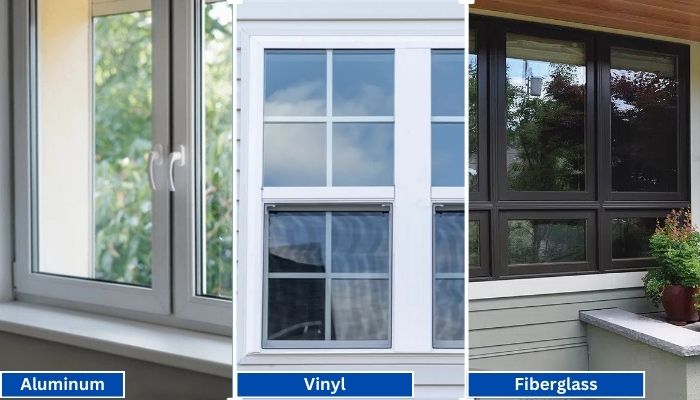
Vinyl generally has the shortest lead times because it is widely produced in standard configurations. Fiberglass is mid-range, especially for factory-painted colors.
Read More
PROUDLY CANADIAN COMPANY OWNED & OPERATED IN TORONTO SINCE 1989!
Vinyl generally has the shortest lead times because it is widely produced in standard configurations. Fiberglass is mid-range, especially for factory-painted colors.
Read More
Vinyl windows have become the go-to choice for homeowners in Toronto, thanks to their durability, energy efficiency, and low maintenance requirements. Whether you're upgrading your home for better insulation or enhancing
Read More
Thinking about changing your front door? A fiberglass Dutch door might have caught your eye. It’s not just a door. It’s part style statement, part smart functionality.
Read More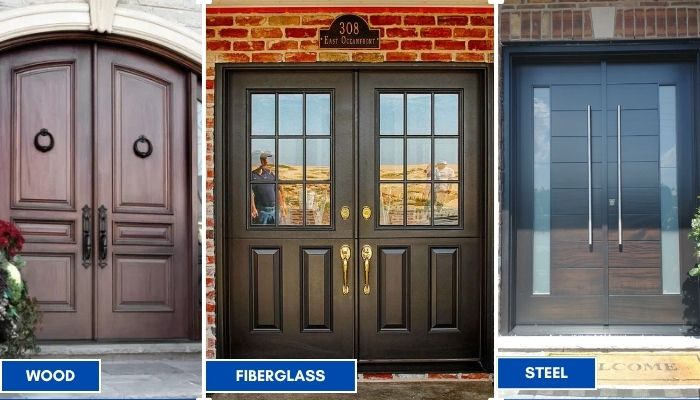
Thinking about replacing your front doors? Double doors are a bold upgrade. They look great, let in more light, and make moving big stuff easier. But the material you choose makes all the difference; especially here in Toronto.
Read More
Thinking of giving your home that cozy, farmhouse charm? Let’s talk doors. Specifically, the fiberglass front doors in farmhouse style. You get the rustic look, without the rot, warping, or constant upkeep that comes with wood.
Read More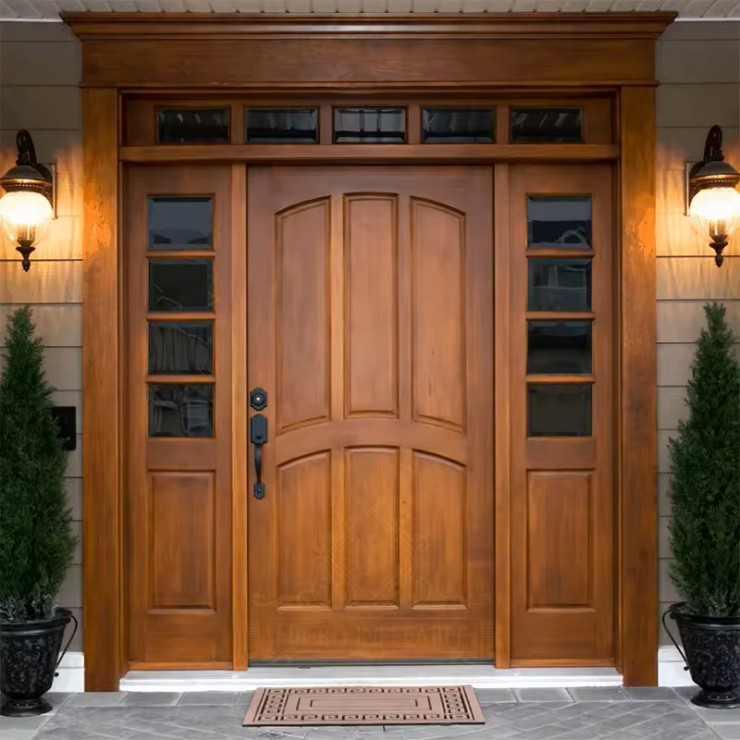
You want something that looks great, lasts long, and doesn’t stress you out with maintenance. You’re not alone. That’s exactly why more and more Toronto homeowners are choosing...
Read More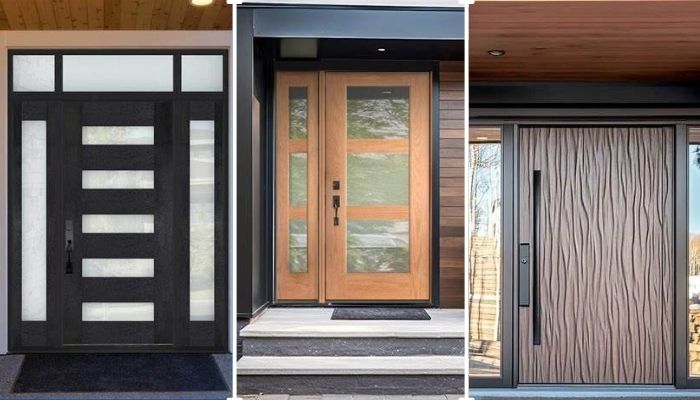
Thinking about replacing your front door? Let’s talk fiberglass. It's one of the smartest upgrades you can make, especially if you're living in Toronto. Whether your current door is drafty, outdated, or just plain boring.
Read More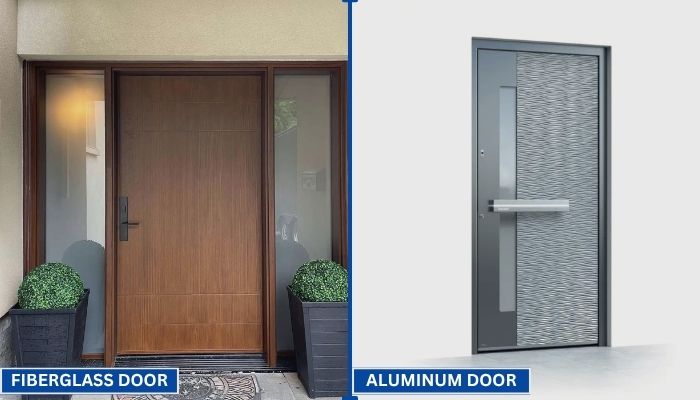
Your front door does more than just open and close. It protects your home, adds curb appeal, and helps control indoor temperature. That’s why picking the right door material matters.
Read More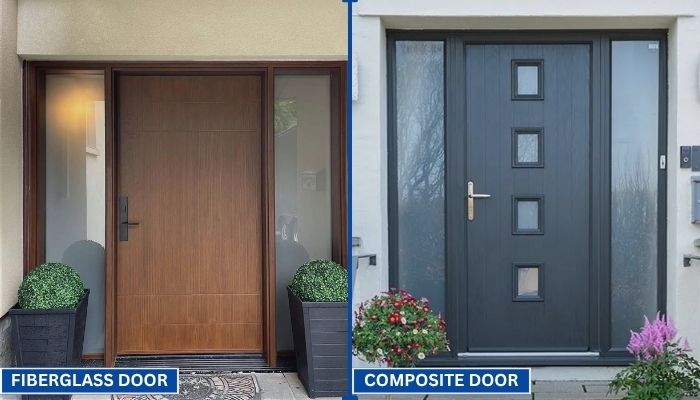
Choosing the right door can be confusing. You want something that looks good, lasts long, and keeps your home secure. Two of the most popular options today are fiberglass and composite doors.
Read More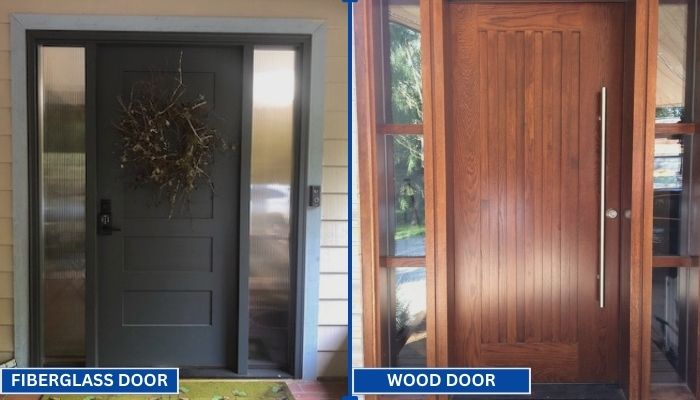
Replacing your front door is a big decision. Wood and fiberglass are two of the most popular materials for entry doors. Each has its own strengths in terms of style, durability, and maintenance. To help you choose the right one for your home, we have to go through a clear comparison.
Read MoreThermodynamic Physics of Vacuum Insulation
A comprehensive system breakdown for engineers, EPC project contractors, and plant cryogenic managers designing transfer lines with minimum boil-off losses.
The Multi-Barrier Insulation Barrier
Vacuum Jacketed Piping (VJP), also designated Vacuum Insulated Piping (VIP), represents the gold standard for high-efficiency cryogenic fluid conveyance. At cryogenic operating regimes—such as Liquid Nitrogen (-196°C / 77 K), Liquid Oxygen (-183°C / 90 K), and Liquid Hydrogen (-253°C / 20 K)—conventional mechanical insulations (polyurethane, cellular glass, perlite) experience rapid thermal breakdown, moisture ingress, ice expansion, and catastrophic Boil-Off Gas (BOG) vaporization.
HL Cryogenics fabricates co-axial double-wall stainless steel lines (ASTM A312 TP304/304L or TP316/316L) configured with an inner process carrier pipe, an outer protective vacuum jacket, proprietary non-metallic low-conduction support spacers, continuous multi-layer superinsulation (MLI), and advanced chemical getter packets to neutralize outgassing.
Inner Carrier Conduit: Austenitic stainless steel designed for internal MAWP up to 4.0 MPa (custom higher pressures upon review).
Annular Deep Vacuum: Factory evacuation down to 1.0 x 10⁻³ Pa (7.5 x 10⁻⁶ Torr) eliminating gas convection and gaseous conduction.
Multi-Layer Superinsulation (MLI): Alternating reflector shields (aluminized Mylar) and glass-fiber spacers mitigating 99% of radiant heat flux.
Noble Gas Getters & Sorbents: Chemically binds trace outgassed hydrogen, moisture, and CO over a 20+ year service life.
Heat Transmission Distribution
Cryogenic Vacuum Jacket
Comparative energy ingress mechanics across identical 1-inch nominal pipe size (NPS 1" / DN25) running liquid nitrogen:
Polyurethane Foam Insulation (50mm Thk)
~25.0 - 32.0 W/m
Cellular Foamglas Pipe Insulation (75mm Thk)
~18.0 - 24.0 W/m
HL Cryogenics Static Super-Insulated VIP
< 0.45 - 0.70 W/m
Engineering takeaway: Vacuum jacketed pipe reduces liquid nitrogen boil-off losses by up to 97.5% compared to traditional rigid closed-cell foam, delivering an ROI payback typically under 9 to 14 operating months.
< 10⁻⁴ Torr
Interspace High Vacuum Level
> 97.5%
Boil-Off Vaporization Reduction
3.0 mm/m
Design Thermal Contraction Compensation
20+ Years
Vacuum Integrity Lifespan
Hydraulic Sizing
Inner Pipe Diameter, Velocity & Pressure Drop Formulations
Balancing economic line sizing against flashing boundaries, acoustic cavitation, and phase-velocity limits.
Velocity Envelope Guidelines
Cryogenic flow velocities must balance line clearance against dynamic pressure head drop and surge pressures (liquid hammer).
LN2 / LAR / LOX: Design nominal 1.2 to 2.2 m/s. Intermittent max: 3.0 m/s. Avoid exceeding 3.5 m/s due to flashing.
Liquid Hydrogen (LH2): Nominal 2.5 to 5.0 m/s due to low viscosity and low density (70.8 kg/m³).
Liquid Helium (LHe): Nominal 0.5 to 1.5 m/s to prevent thermal shock and severe friction head warming.
Darcy-Weisbach Equation
Total internal hydraulic head loss across straight runs is calculated using single-phase liquid flow mechanics:
ΔP = f · (L / Di) · (ρ · v² / 2)
Where f is the friction factor derived from Colebrook-White, L is equivalent piping length (including bayonets and directional changes), ρ is cryogenic fluid density, and Di is inner pipe internal diameter.
Lockhart-Martinelli Two-Phase Flow
When liquid pressure falls below saturation vapor pressure (Psat), flash boiling occurs. Two-phase flow multiplier (ΦL²) must be applied:
(dP/dL)two-phase = ΦL² · (dP/dL)liquid
Gas expansion multiplies pressure drop exponentially. HL Cryogenics phase separators and subcoolers eliminate two-phase slugging at point-of-use equipment.
Nominal Inner Pipe Size Inner OD x Wall Thk (mm) Outer Jacket OD (mm) LN2 Flow Range @ 1.5 m/s (L/min) Heat Gain @ 77K (W/m) Max Working Pressure (MAWP)
NPS 1/2" (DN15) 21.3 x 2.11 (Sch 10S) 63.5 x 2.0 15 – 25 L/min < 0.40 W/m 2.5 - 4.0 MPa (362 - 580 psi)
NPS 1" (DN25) 33.4 x 2.77 (Sch 10S) 76.2 x 2.0 50 – 85 L/min < 0.55 W/m 2.5 - 4.0 MPa (362 - 580 psi)
NPS 1-1/2" (DN40) 48.3 x 2.77 (Sch 10S) 101.6 x 2.0 120 – 210 L/min < 0.72 W/m 2.0 - 3.0 MPa (290 - 435 psi)
NPS 2" (DN50) 60.3 x 2.77 (Sch 10S) 114.3 x 2.0 220 – 350 L/min < 0.90 W/m 2.0 - 3.0 MPa (290 - 435 psi)
NPS 3" (DN80) 88.9 x 3.05 (Sch 10S) 152.4 x 2.5 500 – 850 L/min < 1.25 W/m 1.6 - 2.5 MPa (232 - 362 psi)
NPS 4" (DN100) 114.3 x 3.05 (Sch 10S) 168.3 x 3.0 900 – 1500 L/min < 1.60 W/m 1.6 - 2.0 MPa (232 - 290 psi)
Insulation Physics
Static Vacuum vs. Dynamic Continuously Pumped Vacuum Systems
Selecting the optimal operational architecture based on layout scale, long-term maintenance resources, and lifecycle OPEX.
Static Vacuum Insulated Piping
Factory Sealed System
Static VJP consists of modular, factory-evacuated pipe spools. Each spool features a sealed vacuum pump-out port, internal molecular sieve, chemical getter packs, and cold-plug bayonets. Once installed, no vacuum pumps or continuous power sources are required on-site.
Zero Continuous Power: No turbo-molecular or backing pumps consuming electricity.
Modular Redundancy: If one section loses vacuum due to physical impact, adjacent sections remain isolated and intact.
Best Applications: Industrial gas delivery, electronics cleanrooms, semiconductor fabs, aerospace launch pads, biobanks.
HL Cryogenics Advantage: High-vacuum bake-out ovens operating at 150°C under 10⁻⁵ mbar ensure maximum desorption of hydrogen and water vapor prior to final pinch-off.
Dynamic Vacuum Insulated Piping
Continuously Pumped System
Dynamic VJP interconnects the outer jackets of multiple pipe spools into an integrated vacuum envelope serviced by continuously active vacuum pumping stations (turbo-molecular and rotary vane pumps) installed throughout the facility.
Lower Initial Spool Cost: Spools do not require individual factory sealing ports or chemical getter packs.
Maintenance Overhead: Requires 24/7 pump power, oil changes, thermocouple monitoring, and scheduled turbo rebuilding.
System Failure Risk: Vacuum failure in one segment or pumping station degrades insulation across the connected network.
Summary: Dynamic systems are typically restricted to localized research laboratories or large, fully manifolded test stands with dedicated technician oversight.
Mechanical Mechanics
Cryogenic Thermal Contraction, Bellows & Structural Supports
Preventing high-stress fatigue cracking, flange warping, and cold-bridge failures across deep cryogenic cooling cycles.
The 3.0 mm/m Thermal Contraction Reality
When chilled from ambient installation temperature (+20°C / 293 K) down to liquid nitrogen saturation temperature (-196°C / 77 K), standard 300-series austenitic stainless steel exhibits a linear thermal contraction coefficient of roughly 0.3%.
ΔL = L₀ · α · (T_ambient - T_cryo) ≈ 2.9 to 3.2 mm per linear meter
A straight 50-meter line run will physically shrink by 150 mm (15 cm) upon initial cryo-shock. Without engineering accommodation, axial stress will tear apart field joints, anchors, and process valves.
Compensation Engineering Architecture
Internal Expansion Bellows: Multi-ply hydroformed SS316L bellows welded directly within the inner line absorbs axial displacement while maintaining vacuum interspace integrity.
External Jacket Bellows: Placed on the outer vacuum casing when the inner line is anchored, isolating structural expansion forces between outer jacket and internal conduit.
Thermal Decoupled Spacers: Non-metallic, high-compressive-strength G10/FR4 composite internal radial supports maintain coaxial alignment while preventing heat conduction.
Rigid VIP Spools
Manufactured in standardized straight spools (up to 6m or 12m) with integrated directional elbows and tees. Features lowest possible heat ingress (<0.5 W/m), long operational lifetime, and cleanroom-grade aesthetics.
Optimal for Main Cryogenic Headers & Long Trunks
Flexible Vacuum Jacketed Hoses
Constructed with corrugated flexible inner and outer stainless steel bellows wrapped in MLI. Absorbs thermal expansion, mechanical vibration, and accommodates complex geometry offsets.
Optimal for Tool Drops, Tank Trailers & Vibration Isolation
Joining Technologies
Interconnection Methods: Bayonet vs. Flange vs. Welded Sleeve
A multi-parameter engineering comparison of field connection methodologies for cryogenic vacuum piping.
Evaluation Parameter Bayonet Joint (Male/Female Cold-End) Welded Field Joint (Pumped Sleeve) Bolted Flange with Cold Gasket
Heat Ingress / Thermal Loss Ultra Low (<1.5 W per joint) Absolute Zero Added Loss High (Frost & Condensation Common)
Disassembly / Reconfigurability 100% Reusable (V-Band or Flange Clamp) Destructive Cut Required Easy Bolted Disassembly
Field Installation Speed 15 – 30 Minutes Per Joint 4 – 8 Hours (Field TIG + Vacuum Pump) 30 – 45 Minutes
Vacuum Maintenance Spools Remain Factory Sealed Requires field pumping post-welding None (Non-vacuum joint zone)
Capital Cost vs. Labor Higher spool cost, lowest field labor Lower spool cost, extreme field labor Lowest initial cost, high operating losses
Recommended Installation Areas Semiconductor cleanrooms, testing labs, modular plant routing Buried underground trenches, permanent outdoor bulk lines Short utility connections, non-critical vent exhausts
Close-Tolerance Bayonet Thermal Trap Design
HL Cryogenics Bayonet connections utilize an ultra-low-clearance male/female assembly design. When cryogenic fluid enters the bayonet joint, a controlled gas pocket forms via thermal vapor-lock physics at the inner nose tip, preventing liquid cryogen from ever contacting the silicone O-ring ambient seal. The ambient O-ring remains at room temperature, eliminating freeze-degradation.
Cryogenic Flow Control
Integrated Cryogenic Equipment: Valves, Degassers & Phase Separators
Ensuring ultra-pure, bubble-free single-phase liquid delivery directly to high-precision process tools.
Vacuum Jacketed Valves (VJV)
Standard cryogenic extended-stem valves develop heavy ice balls around the bonnet, freezing valve actuators and packing seals.
HL Cryogenics incorporates high-vacuum jacketed globe, check, and proportional control valves. The vacuum jacket extends fully up the valve stem to prevent exterior condensation, while pneumatic/electric actuators operate under room ambient temperature.
Cryogenic Gas Vents (Degassers)
Boil-off gas accumulation creates vapor locks that choke piping headers and disrupt steady downstream liquid flow rates.
Installed at system high points, HL dynamic gas vents feature a precision mechanical float mechanism. The valve expels accumulated boil-off gas continuously while snapping tight immediately upon liquid contact, ensuring zero liquid LN2 waste.
Liquid Phase Separators (GLS)
Semiconductor lithography, MBE, and cryobiology freezers require 100% saturated liquid without two-phase bubbles.
HL Cryogenics Vacuum Jacketed Phase Separators depressurize and de-gas incoming cryogens, venting flash gas to outside safe zones and supplying low-pressure, gravity-fed subcooled liquid nitrogen to delicate downstream tool interfaces.
Safety & Quality Engineering
Design Pressure, Overpressure Protection & ASME Standards
Safeguarding piping networks against catastrophic thermal expansion, vapor explosions, and annular loss.
The Liquid Trapping Danger & Thermal Relief Sizing
Cryogenic fluids possess huge liquid-to-gas expansion ratios. Liquid Nitrogen expands 694:1 when warming up to ambient temperature within an enclosed volume. Liquid Hydrogen expands 848:1.
If cryogenic liquid becomes trapped between two closed isolation valves without overpressure relief, trapped liquid warming can generate hydrostatic pressures exceeding 2,500 bar (36,000 psi) within minutes, causing explosive mechanical rupture (BLEVE).
Inner Line Thermal Relief Valves (TRV): Every piping section capable of liquid entrapment must feature a dual-safety PRV arrangement set at 1.1x MAWP.
Outer Jacket Rupture Discs: Protects the outer jacket against catastrophic internal line leakage, venting vacuum space safely at 0.5 to 1.0 bar (gauge).
ASME B31.3 Chapter III & IX Compliance: All HL Cryogenics lines conform strictly to High-Pressure Piping & Severe Cyclic Service rules.
Quality Assurance & Non-Destructive Testing (NDT)
Helium Mass Spectrometer Leak Detection: Vacuum jacket and process carrier undergo 100% helium spray and vacuum hood testing (Acceptance leak rate: < 1 x 10⁻⁹ mbar·L/s).
X-Ray Radiographic Inspection: 100% butt weld radiography on inner pressure containment pipes per ASME B31.3 Class K requirements.
Hydrostatic / Pneumatic Pressure Testing: Inner process carriers pressure-tested to 1.5x design MAWP under certified inspection logs.
Cryogenic Cold Shock Test: Spools immersed in liquid nitrogen at -196°C prior to final seal pinch-off to guarantee joint fatigue resistance.
Design Pitfalls
Top 4 Critical Engineering Mistakes in Cryogenic Layouts
Avoid costly operational downtime by identifying common routing and specification errors before procurement.
01
Dead Legs Without Slopes
Stagnant vertical branch legs accumulate vapor plugs. Always ensure horizontal pipes have a minimum 0.5% to 1% gradient slope upward toward vapor release vent points.
02
Rigid Point-To-Point Anchoring
Fixing both ends of a straight run to solid concrete walls without expansion loops or bellows causes severe stress failure during thermal contraction cycles.
03
Uninsulated Valve Stems
Using standard non-jacketed gate or ball valves produces continuous cold bridges, heavy water dripping, structural ice buildup, and premature seat degradation.
04
Under-Sized Pipe Diameters
Undersizing lines creates excessive fluid velocity (>3.0 m/s), leading to frictional heat generation, sudden liquid flashing, and irregular chattering delivery at point-of-use.
Procurement Specification
Engineering RFQ Checklist for Vacuum Jacketed Piping
Ensure an accurate, expedited quote by reviewing these essential project parameters before submitting your RFQ.
1. Fluid Characteristics
Cryogenic Media (LN2, LOX, LAR, LNG, LH2, LHe)
Purity Class (Industrial vs. Semiconductor Grade 5N/6N)
Fluid Phase Requirement (Saturated vs. Subcooled)
Mass / Volumetric Flow Rate (Min / Norm / Peak L/min)
2. Hydraulic Parameters
Bulk Storage Tank Supply Pressure (bar / psi)
Allowable Pressure Drop Limit across entire route (ΔP)
Tool / Usage Terminal Pressure Requirement
System Maximum Allowable Working Pressure (MAWP)
3. Layout & Architecture
Preliminary Isometric or 2D P&ID Routing Drawing
Penetration details (Wall sleeves, roof clearances)
Connection interface preference (Bayonet vs. Welded Sleeve)
Accessory requirements (Gas Vents, Phase Separators)
Knowledge Base
Frequently Asked Technical Questions
Real-world engineering answers from the HL Cryogenics application design team.
What is the typical lifespan of a factory-sealed static vacuum piping system?
When manufactured under automated vacuum bakeout schedules with premium chemical getters and stainless steel metallurgy, HL Cryogenics static VJP systems maintain high-vacuum thermal insulation integrity for over 20 years without requiring re-evacuation.
How does an engineer diagnose vacuum loss in an installed VJP line?
Vacuum degradation is visually recognizable by outer jacket surface condensation or dense frost ring formation during fluid transfer. Thermal imaging cameras can quickly pinpoint exact heat leaks, and jacket vacuum levels can be verified via thermocouple gauges attached to the seal-off port.
Can Vacuum Jacketed Piping be used for Liquid Oxygen (LOX) service safely?
Yes. All LOX piping undergoes rigorous chemical degreasing, ultrasonic passivation, and ultraviolet blacklight inspection per ASTM G93 and CGA G-4.1 to remove hydrocarbons, oils, and particulate matter before assembly, completely eliminating combustion hazards.
How do bayonets prevent frost formation at pipe joint junctions?
The long overlap clearance between male and female bayonet sections creates a thermal vapor-lock gas cushion. Fluid cools the tip, but ambient temperature is maintained at the outer flange ring, preventing ice formation without external electrical heat tracing.
We’ll Come To You!
Quality New Windows & Doors. Competitively Priced!
Christine R.
Please, enter a valid value